
The AI Paradox
Mar 28, 2026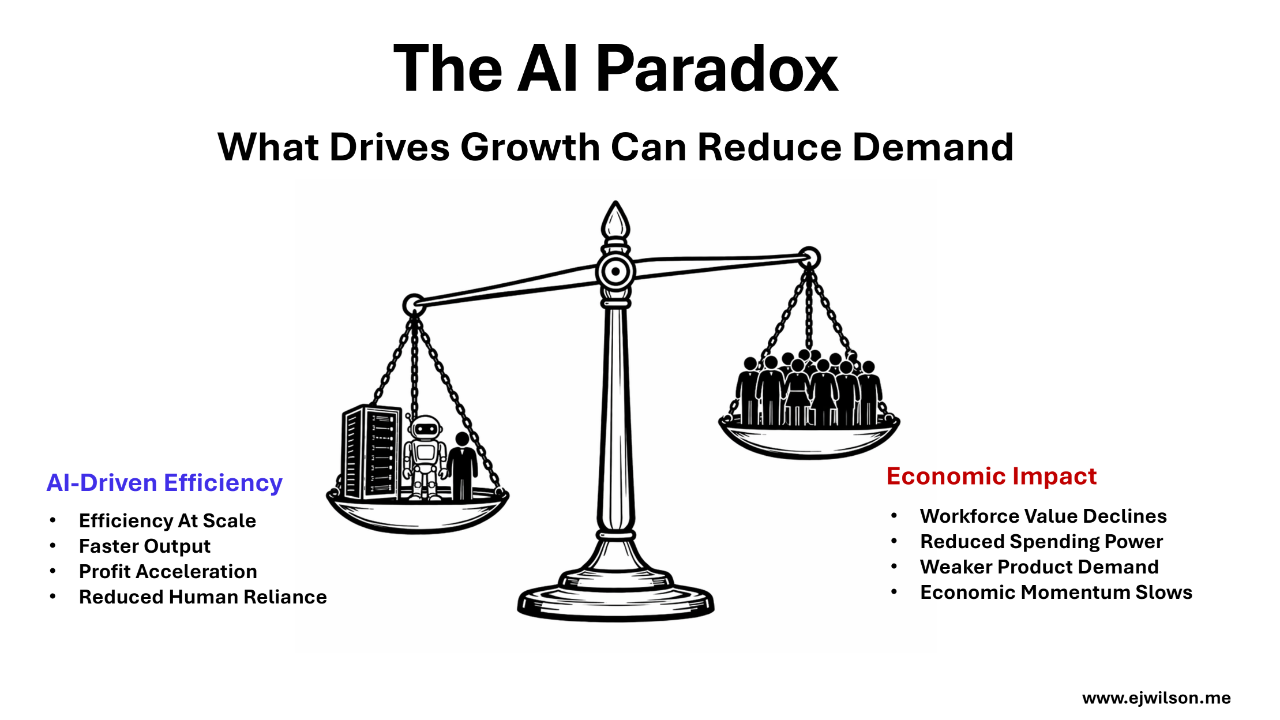
Efficiency at scale is a game changer.
It allows more to be produced with less time and effort.
It changes how value is created.
It also reshapes who participates and benefits from it.
At first, the gains are obvious.
Things move quicker.
Operations feel smoother.
Profits improve.
But over time, the shift changes how the game is played.
Fewer individuals and tools are needed to sustain higher levels of output.
More of the benefits get concentrated into smaller groups.
The relationship between the people-based contribution and reward begins to stretch.
And when that gap widens, the effects ripple outward.
Household purchasing ability lags behind.
Market activity begins to soften.
Sustainable business expansion becomes harder to maintain.
Not because the system stops working, but because fewer people are positioned to fully engage with it.
So eventually, the pressure on the company returns.
More optimization is required to maintain performance.
More systems are introduced to replace the existing technical and human inputs.
The cycle continues.
A self-destructing loop.
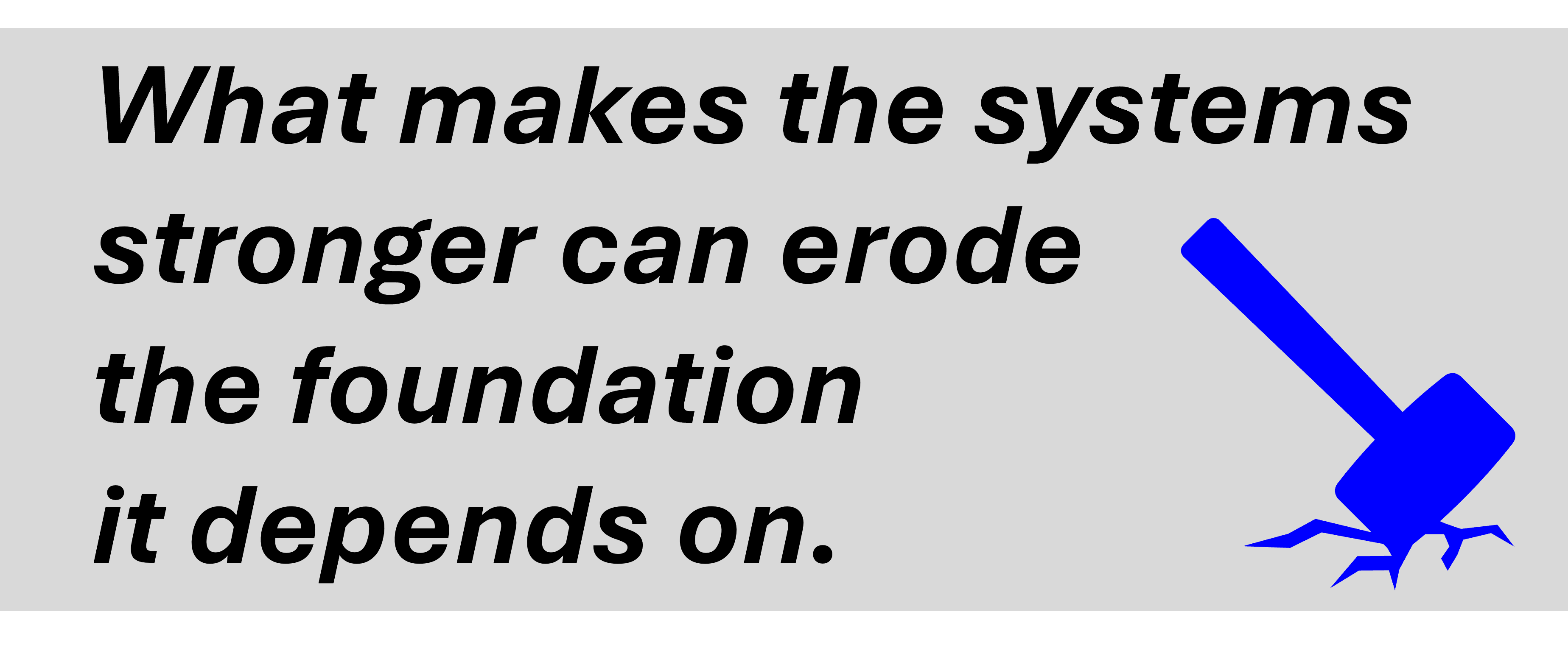
The same force that drives advancement can quietly erode the conditions that support it.
That is the AI Paradox.
When does what’s good for the company become bad for the system?